
What Sells Best On AliExpress For Dropshipping
Learn what sells best on AliExpress for dropshipping, how to evaluate demand, vet suppliers, test products, and avoid risky categories.

Browsing AliExpress for dropshipping products looks deceptively simple. The catalog is enormous, the seller base is global, and many prices are low enough to build a meaningful margin. The problem isn't supply — it's signal. Most products on the platform will never generate consistent sales regardless of how well your store is built or how much you spend on ads. A small subset will.
Understanding what separates the two categories — and how to identify the right products before you build a store around them — is the foundation of any sustainable AliExpress dropshipping operation. The answer isn't a list of specific products. Products trend and fade. The answer is a framework for evaluating categories and individual listings that holds up regardless of what's trending in any given month.

The Categories That Consistently Outperform
Certain product categories on AliExpress have structural advantages for dropshipping that persist across trend cycles. These advantages include high order volumes that signal proven demand, low per-unit prices that allow meaningful markup, and product types where customers have lower tactile expectations — meaning they're less likely to return something because it doesn't "feel right" in person.
The categories with the strongest sustained dropshipping performance:
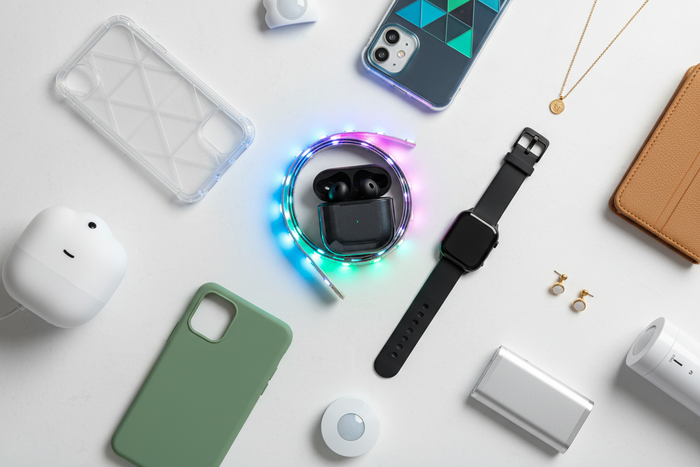
- Consumer electronics accessories. Phone cases, charging cables, screen protectors, earbuds, and portable power banks consistently generate high volumes. Price points of $5–$25 allow for 200–400% markup while still undercutting retail. The category benefits from constant product refresh as new phone models release — creating recurring demand without requiring a change in your marketing strategy.
- Home and kitchen gadgets. Compact, problem-solving items — silicone cooking tools, organisation products, space-saving accessories — sell well because they're difficult to evaluate in person and easy to impulse buy at low price points. Air fryer accessories, storage solutions, and LED lighting often perform well because they solve visible household problems and fit seasonal content angles.
- Fashion accessories and jewellery. Low per-unit cost, high perceived value, and low return rates (customers rarely return accessories costing under $15) make this category structurally attractive. Minimalist jewellery, hair accessories, and seasonal items like sunglasses and scarves have strong consistent demand across demographics.
- Health and beauty tools. Facial massage tools, skincare devices, and grooming accessories sit in a category with high emotional purchase motivation. When these products are marketed correctly — demonstrating a result rather than listing a feature — they convert well from social ads. The category has grown significantly since 2022 as TikTok made before/after content a primary discovery mechanism for beauty tools.
- Pet supplies. A category with high repeat purchase rates and buyers who are less price-sensitive than the general eCommerce average. Interactive pet toys, grooming tools, and travel accessories have strong order histories on AliExpress and relatively low return rates.
How to Read AliExpress Data Before Committing to a Product
AliExpress surfaces its own demand data directly on product listings — most dropshippers don't use it systematically. Reading these signals correctly before selecting a product reduces the risk of building a store around something with insufficient real-world demand.
The four metrics to evaluate on every product listing:
- Order count. The number of orders on a listing is the most direct signal of proven demand. Products with fewer than 100 orders may be genuinely new or may have failed to find a market. Products with 1,000+ orders have demonstrated sustained demand — though very high order counts (100,000+) can also indicate heavy competition. The 1,000–10,000 range is typically the highest-value window: proven demand, not yet oversaturated.
- Rating and review quality. As a practical benchmark, many dropshippers look for products with ratings above 4.5 stars. But rating alone isn't sufficient — read the actual reviews. Specifically look for: mentions of shipping time, photos from real buyers, and any recurring complaints about quality consistency. A 4.7-star product with dozens of reviews mentioning "longer than expected shipping" is a different risk profile than a 4.7-star product with reviews focusing on product quality.
- Seller satisfaction score. As a practical benchmark, look for suppliers with a satisfaction rate of at least 95%. Click the seller's name and check how long they've been active on the platform. A supplier with three years of trading history and a 97% satisfaction score is a different supplier than one who's been active for six months with a 95% score — even though both technically meet the threshold.
- Shipping options and speed. Products available with AliExpress Premium Shipping (formerly ePacket) or AliExpress Standard Shipping with tracking are significantly lower risk than those with only untracked budget shipping options. Products with faster tracked options reduce customer support burden meaningfully because customers can follow delivery progress instead of asking for manual updates.

Validating Demand Outside AliExpress
AliExpress order counts tell you what people have bought through the platform. They don't tell you whether buyers are actively searching for those products right now, or whether a product's moment has already passed. Validating demand using external signals is the step most new dropshippers skip — and why they frequently build stores around products that can't be profitably advertised.
Three external validation tools worth using before committing:
- Google Trends. Search the product category or specific product name and look at the trend line over 12–24 months. A product with a rising or stable trend line has ongoing search demand. A product with a trend line that peaked 18 months ago and has been declining since is a product you're entering late. Seasonal spikes — Christmas decorations, summer outdoor gear — are clearly visible and can be planned around rather than avoided.
- Google Keyword Planner (or any keyword tool). Enter your product term and check monthly search volume. Avoid product categories that have little or no search traffic — they're either too niche to scale or not yet in consumer awareness. Aim for categories with 10,000+ monthly searches in your target market.
- TikTok and Instagram search. For impulse-buy categories — gadgets, beauty tools, home accessories — social discovery drives a significant portion of sales. Search for your product on TikTok and look at view counts on the top results. High-view "in use" videos are the strongest signal that a product is currently in its discovery phase. Low view counts despite multiple creators posting suggests the content isn't catching.
What to Avoid: Products that Create Predictable Problems
Some product characteristics create operational problems for dropshipping stores at scale regardless of how well they sell. Knowing what to exclude from consideration saves time and protects customer satisfaction rates.
- Branded or branded-adjacent products. Products that resemble or carry brand names — whether explicit replicas or products that simply use a recognisable brand's aesthetic — create legal exposure and platform risk. Avoid anything that looks like it could be a counterfeit product. A safer approach is to opt for unbranded products and stay within categories where brand is not a primary purchase driver.
- Electronics requiring safety certification. Chargers, cables, and accessories that plug directly into power sources carry product liability risk if they malfunction. Items in this category that don't have identifiable CE, FCC, or RoHS markings in their listing descriptions are higher risk than those that do.
- Products with fragile components and no protective packaging. Glassware, mirrors, ceramic items, and delicate electronics shipped in AliExpress's standard packaging have high damage rates in transit. Unless the supplier specifically offers enhanced packaging (visible in listing photos), these categories generate disproportionate refund requests.
- Very cheap items with very long shipping times. Products priced under $1–$2 wholesale with 45+ day shipping windows rarely make economic sense. The marketing cost to generate a sale, combined with the customer service burden of managing delivery expectations over 45 days, erodes margin on most ad channels. The best-performing AliExpress dropshipping products have wholesale prices of $3–$20 with shipping times under 20 days.
Testing Before Scaling
The biggest operational mistake in AliExpress dropshipping is committing to a product category without testing. Demand validation tools give directional signals — they don't guarantee that a specific product at a specific price point to a specific audience will generate profitable sales. Testing does.

A practical testing approach before scaling ad spend:
- Order samples of every product you plan to sell before running ads. This is the single most important step most new dropshippers skip. Placing a test order provides firsthand data on actual shipping time, packaging quality, and product-listing accuracy — three variables that directly affect customer satisfaction and return rates.
- Start with a small ad budget — $50–$100 per product — and measure cost per purchase rather than cost per click. A product that generates cheap clicks but no purchases has an audience-product mismatch that more budget won't fix.
- Test two or three products simultaneously in separate ad sets rather than running all budget to one product. The fastest path to a winning product is running parallel tests, not sequential ones.
- Define a clear stopping rule before testing: if a product doesn't generate a purchase within X dollars of ad spend, move to the next. Most experienced dropshippers use $50–$100 as this threshold.
Ready to turn AliExpress product research into a smarter testing process?
Final Thoughts
What sells best on AliExpress for dropshipping isn't a static list — it's a set of product characteristics that hold up across categories and trend cycles. High order counts with strong ratings, a price point that allows meaningful markup, external demand signals that confirm current search interest, and a supplier with a verified track record. Products that meet all four criteria in categories with low return rates are the ones that build sustainable dropshipping stores.
The categories — electronics accessories, home gadgets, fashion accessories, beauty tools, pet supplies — recur in the top performers year after year because the structural advantages that make them good for dropshipping don't change. What changes is which specific products within those categories are at their demand peak. The framework for finding them stays the same.
Sourcing dropshipping products through AliExpress works best when selection is treated as a systematic process rather than a browse-and-guess exercise — the platform rewards merchants who read its signals correctly before spending money on ads.
FAQ
What is the minimum order count to look for on AliExpress?
Aim for products with at least 1,000 orders. This indicates proven demand without extreme competition. The 1,000–10,000 range is typically the sweet spot for dropshipping products.
Do I need to order samples before selling?
Yes. A test order is the only reliable way to verify shipping time, packaging quality, and product accuracy before sending customer orders to a supplier.
What supplier rating should I look for?
At least 95% satisfaction rate, with preference for suppliers who have been active on the platform for two or more years. Rating alone isn't sufficient — check the review content for recurring complaints about shipping or quality.
How long does AliExpress shipping take for dropshipping?
Shipping time depends on the method, supplier, and destination. Trackable options are usually safer because customers can follow delivery progress.
Can I dropship AliExpress products on multiple platforms?
Yes, but inventory, pricing, and order routing must be managed carefully. Start with one storefront before expanding to additional sales channels.
We only recommend tools we've tested and trust. This post may include affiliate links, meaning we may earn a commission if you choose to purchase - at no extra cost to you.


